Your First Keratin Extension Appointment in London: What Actually Happens
Contents:
- Topic Unpacking: What a Keratin Extension Appointment Involves
- Who Is the Appointment For?
- History and Context: Why London Became a Hub
- Key Aspects: Before the Appointment
- Booking a Consultation
- Choosing the Hair
- Preparing Your Own Hair
- Key Aspects: What Happens in the Chair
- Stage 1: Consultation and Final Plan (20 to 30 Minutes)
- Stage 2: Sectioning (10 to 15 Minutes)
- Stage 3: Bonding (1.5 to 3 Hours)
- Stage 4: Cutting and Blending (20 to 40 Minutes)
- Stage 5: Styling and Check (15 to 20 Minutes)
- Stage 6: Aftercare Briefing (10 Minutes)
- Key Aspects: Choosing a Salon in London
- Expert Insights: What Stylists Wish Clients Knew
- Key Aspects: Which Bond Size Will You Be Offered?
- Key Aspects: The Consultation in Detail
- Key Aspects: Colour and Texture Matching
- Key Aspects: Safety, Allergies and Sensitivities
- Key Aspects: What to Wear and Bring
- Key Aspects: Getting to and From the Salon in London
- Expert Insights: First Appointment vs Move-Up
- Practical Application: Costs in London in 2026
- Getting the Most From the Budget
- Practical Application: The First Week at Home
- Days 1 and 2
- Days 3 to 7
- What Is Normal and What Is Not
- Practical Application: Maintenance Schedule
- Practical Application: Mistakes First-Timers Make
- Practical Application: Timing Your First Appointment
- What Ivana Farisei Clients Usually Say After the First Visit
- Questions to Ask Before You Book
- Common Concerns, Answered
- Will It Hurt?
- Will It Damage My Hair?
- Can I Wear My Hair Up?
- Can I Swim?
- Frequently Asked Questions
- How long does a first keratin extension appointment take?
- How much does it cost in London?
- Do I need to cut my hair first?
- Can I colour my hair after the fitting?
- What if I change my mind?
- Walking Out of Your First Appointment
Most of the anxiety around a first keratin extension appointment in London comes from a single misconception: that something dramatic and slightly frightening is about to be done to your hair. In reality, the visit is closer to a long, methodical craft session. Nothing is cut off, nothing is dyed without discussion, and each of the 100 to 200 strands is placed by hand. Knowing the sequence in advance removes most of the worry.
This guide follows a first appointment from the day before to the first week at home. It explains each stage in plain language, gives realistic timings and costs for keratin hair extensions in London in 2026, and lists the questions worth asking before you sit in the chair.
Topic Unpacking: What a Keratin Extension Appointment Involves
Keratin extensions are strands of human hair, each with a small keratin tip, fused to thin sections of your own hair using a heated tool. The appointment has five phases: consultation, preparation, fitting, finishing and aftercare briefing. In total, expect two to four hours in the salon, and a little longer for a full, dense set.
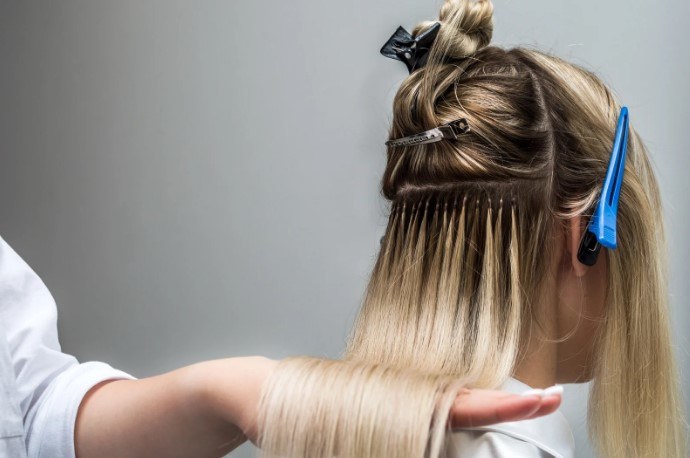
The strands are placed in rows, starting at the nape and working upwards towards the crown, with the top layer left free to cover the bonds. Each bond sits about a centimetre from the scalp. The finished set moves with your hair, as every strand is attached separately.
Who Is the Appointment For?
People book for several reasons: to add length, to add volume, to cover thinning areas or to try a colour without dyeing their own hair. Every one of these goals changes the plan, which is why the first stage is a conversation and not a procedure.
History and Context: Why London Became a Hub
London has long been a centre for hair, from the wigmakers of the eighteenth century to the salons that shaped the fashion of the past fifty years. The city’s size, its mix of hair textures and its competitive salon market have produced a high level of specialisation. Today, a client can find stylists who work only with fusion extensions, only with curly textures or only with colour correction.
Keratin bonding itself arrived in the UK in the 1990s and became mainstream over the following two decades. The method suited London’s demands: it looked natural under office lights, held up in wet weather and could be maintained on a predictable schedule. That reputation attracts clients from across the country, and from abroad, who often combine a visit with a trip to the city.
A regional note for visitors: people travelling from the US often notice that British salons book longer appointment slots and prefer a consultation before any booking. Whether you come from the Northeast, where winter dryness dominates, the South, where humidity is the main concern, or the West Coast, where sun and salt are the issue, tell the stylist. Climate shapes the products and the maintenance schedule they recommend.
Key Aspects: Before the Appointment
Booking a Consultation
Most reputable salons start with a consultation, either in person or by video. It may be free or carry a fee of £20 to £50, often credited against the booking. The stylist looks at your hair, discusses your goals and recommends a method, a number of strands and a colour plan. You receive a written estimate.
Choosing the Hair
Colour, texture and length are chosen together. A good stylist will hold sample strands against your hair in daylight and may blend two or three shades for a natural result. If you have curly or coily hair, the texture of the strands matters more than the colour, so ask to see samples wet and dry.
Preparing Your Own Hair
- Wash your hair the day before with a gentle shampoo, and skip heavy conditioner on the roots.
- Avoid oils, silicone serums and styling products on the day.
- Arrive with clean, dry hair, brushed through but not styled.
- Eat before you come. The appointment is long, and sitting still for hours is easier on a full stomach.
- Bring a charger, a book or headphones.
Key Aspects: What Happens in the Chair
Stage 1: Consultation and Final Plan (20 to 30 Minutes)
Even if you have had a consultation, the stylist begins by re-checking your hair on the day. They confirm the number of strands, the placement and any changes since the quote. This is the time to speak up about concerns such as a sensitive scalp or a particular style you want to wear.
Stage 2: Sectioning (10 to 15 Minutes)
The hair is divided into horizontal rows with clips. The first row begins low at the nape, and each subsequent row is lifted to reveal the next. The lines follow the direction of hair growth to avoid creating visible partings.
Stage 3: Bonding (1.5 to 3 Hours)
This is the central part of the appointment. The stylist takes a small section of your hair, about the width of a pencil lead, and places the keratin tip against it. A heated applicator softens the tip, and the stylist rolls it between finger and thumb or uses a flat clamp to shape a smooth, narrow bond. The process takes about 30 to 60 seconds per strand and is repeated 100 to 200 times.
You should feel gentle pressure and a little warmth, but no pain or burning. If anything feels uncomfortable, say so immediately.
Stage 4: Cutting and Blending (20 to 40 Minutes)
Once the strands are in place, the stylist cuts them to blend with your natural hair. For a layered cut, this can mean adding face-framing pieces or softening the ends. Curly sets are usually cut dry, curl by curl, so the shape is judged as it will fall.
Stage 5: Styling and Check (15 to 20 Minutes)
The hair is brushed, styled and checked from all angles in daylight. The stylist examines the bonds, the hairline and the nape, and asks how it feels. Minor adjustments are made at this point.
Stage 6: Aftercare Briefing (10 Minutes)
You receive instructions on washing, brushing, sleeping and styling, along with advice on when to book your first move-up. Many salons provide a written sheet or send the information by email.
What the Pros Know: Take a photo of the back of your head as you leave. It records exactly how the set looked on day one, which is useful for comparing at the first move-up and for noticing any slow changes in position or density.
Key Aspects: Choosing a Salon in London
London offers hundreds of options, and prices and quality vary. A few practical filters narrow the field.
- Specialism: does the salon fit extensions daily, or is it an occasional add-on?
- Portfolio: are there before-and-after photos of hair similar to yours?
- Hair quality: can they explain the source, the cuticle alignment and whether the hair can be reused?
- Consultation: is it thorough, and is the advice honest?
- Quote clarity: does the quote separate hair, labour and maintenance?
- Aftercare: is there a follow-up check, and are move-ups priced clearly?
For those searching for keratin hair extensions london specialists, the team at Ivana Farisei offers a consultation-led process, and it is a good example of what a first visit should feel like: unhurried, detailed and focused on your hair, not a standard package.
Expert Insights: What Stylists Wish Clients Knew
Experienced fitters tend to repeat the same advice, and it is worth listening to.
- Start smaller than you think. It is easy to add strands later, but harder to take them away. A first set of 100 to 120 strands is plenty for most people.
- Do not rush the colour. Check it in daylight, preferably by a window, before the strands are bonded.
- Tell the truth about your routine. If you swim daily or wear tight ponytails, say so. The stylist can adjust the plan.
- Book the move-up straight away. Diaries fill quickly, and missing the window causes tangles.
- Speak up about discomfort. Early adjustments take seconds, while living with tight bonds for weeks does not.
At Ivana Farisei, stylists explain each stage as they go, so clients know what they are feeling and why. It is a small thing, but it turns a long appointment into a collaborative one.
Key Aspects: Which Bond Size Will You Be Offered?
One of the decisions made during the consultation is bond size, and it influences nearly everything that follows: comfort, visibility, durability and price. The stylist usually offers one of three options.
- Standard bonds: larger, strong and quick to fit. Suited to thick hair and a bold change.
- Micro bonds: smaller and the most common first choice for medium hair.
- Nano bonds: the smallest, for fine hair, short cuts and discreet results. They require more strands and a longer appointment.
A reliable stylist will explain why they recommend one size over another and will not use the same size for every client. If the salon offers only a single size, ask why. Specialists who fit all three, as Ivana Farisei does, can adapt the choice to your hair instead of adapting your hair to the product.
Key Aspects: The Consultation in Detail
The consultation deserves more attention than most clients give it, because a good one prevents the problems that appear weeks later. During the conversation, a thorough stylist will do the following.
- Examine the hair: density, thickness, texture and condition across the whole head, not just one section.
- Test strength: gently stretching a few strands to see how they respond.
- Check the scalp: looking for dryness, sensitivity or conditions that might need attention.
- Ask about lifestyle: how often you wash, swim, exercise or heat style.
- Discuss the goal: length, volume or colour, and how natural you want it to look.
- Explain the cost: fitting, hair, maintenance and removal.
- Advise on timing: whether to book now, wait for growth or prepare the hair first.
Where the hair is not ready, an honest stylist will say so and suggest a plan. This is not a sign of reluctance; it is a sign of care.
Key Aspects: Colour and Texture Matching
Matching happens before the fitting, and it is checked again afterwards. The stylist holds sample strands against your hair, preferably by a window, and looks at the roots, mid-lengths and ends separately. Most natural hair is not one shade, so many sets blend two or three tones. Texture is matched at the same time: straight, wavy, curly or coily strands are chosen to follow your natural pattern.
If the match is close but not perfect, a gloss or toner can be applied after fitting. This is a normal part of the process and is often included, or available for a small charge. Ask about it at the outset so there are no surprises.
Key Aspects: Safety, Allergies and Sensitivities
Keratin bonding uses protein-based material, heat and removal solution, and a few precautions apply. Tell the stylist about any allergies, particularly to hair products, adhesives or keratin. Mention sensitive skin, scalp conditions or recent chemical treatments. If you are pregnant or undergoing medical treatment that affects hair, discuss it with your doctor and the stylist before booking.
Salons should use tools with controlled temperature, clean equipment between clients and a well-ventilated space. If something feels unsafe, you are entitled to ask questions or stop the appointment.
Key Aspects: What to Wear and Bring
- A top with a loose neckline or a button-up, so nothing needs to be pulled over your head after the fitting.
- Comfortable clothing, as you will sit for several hours.
- A phone charger, headphones or a book.
- Photos of the look you want, and of any looks you dislike.
- A water bottle and a snack, if the salon allows it.
- A satin scarf or bonnet for the journey home.
Key Aspects: Getting to and From the Salon in London
Practical details matter in a city with congestion charges, parking restrictions and long Tube journeys. Check the route in advance and allow extra time on the day. If you are travelling from outside London, consider a morning appointment so that you can return before the evening rush. Some clients book the first move-up in the same week as another trip into the city, to save time and fares.
On the journey home, avoid tight hats and collars that rub the nape. A loose scarf or hood is gentler. If you are using public transport during a busy period, tie the hair loosely and keep the bonds away from bags and seat backs.
Expert Insights: First Appointment vs Move-Up
The first fitting and the first move-up are different experiences, and it helps to know the contrast.
- Duration: a fitting takes two to four hours. A move-up usually takes two to three.
- Process: a fitting attaches new strands. A move-up removes the bonds, re-tips the strands and bonds them near the scalp.
- Cost: a fitting includes the price of the hair. A move-up is labour only, unless you add new strands.
- Sensation: the first fitting can feel unfamiliar. By the move-up, you know what to expect.
- Decisions: at a move-up you can adjust the number of strands, the colour or the cut.
Understanding this explains why the first appointment is the biggest single investment of time and money, and why the second is far lighter.
The stylists at Ivana Farisei treat the first move-up as a review as much as a service. They check how the hair has settled, whether the bonds have stayed in position and whether the scalp is comfortable, then adjust the plan if needed. That follow-up is where a good set becomes a long-lasting one.
Practical Application: Costs in London in 2026
London prices are higher than the national average, and they vary across the city. As a broad guide:
- Consultation: free to £50.
- Extension hair (100 to 150 strands): roughly £250 to £800 depending on length and quality.
- Fitting labour: roughly £180 to £450.
- Move-ups (every 8 to 12 weeks): roughly £100 to £250.
- Removal only: roughly £60 to £150.
- Aftercare products: roughly £40 to £100.
A first-year budget of £1,200 to £2,800 is realistic, including four to six move-ups. These figures are indicative ranges, not a quote, and central locations such as Mayfair and Knightsbridge sit at the top. Salons in outer zones can be 20 to 30 per cent cheaper.
Getting the Most From the Budget
- Pay for quality hair, since it can be reused.
- Choose a salon with transparent move-up pricing.
- Book appointments in quieter months, such as January or late summer.
- Buy only the aftercare products you will use.
Practical Application: The First Week at Home
Days 1 and 2
Do not wash the hair. Avoid saunas, steam rooms and heavy sweating, which can soften the keratin before it has set. Sleep on satin, with the hair gathered loosely. Expect some tightness at the scalp, which usually eases within 48 hours.
Days 3 to 7
- Wash gently with sulphate-free shampoo, concentrating on the scalp.
- Apply conditioner to the lengths only, away from the bonds.
- Pat dry, then dry the roots thoroughly with a hairdryer on a cool or low heat setting.
- Brush from the ends upwards with a loop brush.
- Braid loosely at night.
What Is Normal and What Is Not
Normal: mild tightness for a day or two, the feeling of small bumps when you touch the roots and slightly more shedding as your own hair finds its place. Not normal: persistent pain, headaches, redness, itching, or bonds that slide in the first week. Contact the salon at once if any of these appear.
Practical Application: Maintenance Schedule
- Week 0: fitting.
- Week 8 to 12: first move-up.
- Every 8 to 12 weeks: further move-ups.
- Month 6: condition check, trim and decision on reuse.
- Month 9 to 12: final move-up of the set, then replacement or a break.
Move-ups take two to three hours and involve removing the bonds, washing and conditioning the hair, re-tipping the strands and re-bonding them near the scalp.
Practical Application: Mistakes First-Timers Make
- Arriving with product in the hair. Oils and serums stop the keratin from gripping. Come with clean, dry hair.
- Choosing by price alone. A low quote can hide poor hair or expensive move-ups.
- Asking for too much length at once. A modest first set looks more natural and lets you add later.
- Not asking about maintenance. Know the cost and the schedule before you pay.
- Washing too early. Wait the full 48 hours so the bonds set properly.
- Using the wrong products. Conditioner and oils on the bonds cause slipping.
- Staying silent about discomfort. Tight bonds can be adjusted in seconds.
Practical Application: Timing Your First Appointment
The best moment depends on your calendar and the season.
- January to March: quieter salons, cooler weather and time to settle in before spring events.
- April to June: a good window before weddings and holidays, though diaries fill up.
- July to August: workable, but swimming and sun need extra care. Book a move-up before you travel.
- September to December: popular for party season. Book early, because slots disappear by mid-November.
Leave at least two weeks between the fitting and any major event, so that you have time to adjust and fix any small issues. A set fitted the day before a wedding gives no room for adjustments, and nerves are rarely helped by an unfamiliar scalp sensation.
What Ivana Farisei Clients Usually Say After the First Visit
The reactions are predictable, and reassuring. Most people say it took less time to get used to than expected, that the hardest part was the length of the appointment, and that they were surprised how normal their hair felt within a week. Several mention that the explanation of aftercare was the most useful part, because it turned vague worries into a simple routine. Those comments echo what the process should deliver: clarity, comfort and a result that looks like it grew there.
Questions to Ask Before You Book
- How many strands do you recommend for my goals, and why?
- What size bonds will you use on my hair?
- Where does the hair come from, and can it be reused?
- What is the total price, including move-ups and removal?
- How long will the appointment take?
- What happens if a bond slips in the first month?
- Who will fit my hair, and how much experience do they have?
Common Concerns, Answered
Will It Hurt?
Not when done well. Most people describe the experience as pleasant or merely boring. Sensitive scalps may feel slight tugging at the nape.
Will It Damage My Hair?
Damage comes from oversized bonds, tension at the hairline, missed maintenance or rough removal. With correct fitting and care, the natural hair is protected and often grows longer because it is handled less.
Can I Wear My Hair Up?
Yes. Ponytails, buns and half-up styles are all possible. Avoid very tight styles that pull on the bonds.
Can I Swim?
After the first 48 hours, yes. Rinse with fresh water before and after, and condition the lengths.
Frequently Asked Questions
How long does a first keratin extension appointment take?
Between two and four hours, depending on the number of strands and the complexity of the cut and colour.
How much does it cost in London?
Expect roughly £430 to £1,250 for the first fitting including hair, with move-ups of £100 to £250. Prices depend on length, quality and location.
Do I need to cut my hair first?
Not necessarily. Your hair needs to be at least 10 to 12 cm long. A trim a week before can improve the base, but heavy changes are best avoided.
Can I colour my hair after the fitting?
It is best to colour your own hair before the fitting. If you need colour afterwards, ask the stylist, who can tone the set or protect the bonds.
What if I change my mind?
The extensions can be removed in a single appointment, usually within one to two hours, without damage to your own hair.
Walking Out of Your First Appointment
A first keratin extension appointment in London should leave you informed as well as styled. You should know how many strands you have, what size the bonds are, when the move-up is booked and what to do if something feels wrong. If you walk out without those answers, the salon has not finished its job.
The best preparation is simple: choose a specialist, ask direct questions and treat the first week as a settling-in period. Done properly, the appointment is the beginning of a routine that takes only a few minutes a day, and the result looks like your own hair on its best day.